Hidradenitis Suppurativa
(pronounced: hide-ra-den-eye-tis sup-you-rah-tee-vah)
Hidradenitis Suppurativa (HS; from the Greek hidros = sweat, and aden = glands) is a chronic, recurrent, inflammatory skin disease characterized by painful, deep-seated nodules and abscesses, most commonly affecting apocrine gland-bearing areas, such as the armpits, breasts, and groin.
HS begins in hair follicles, areas with many oil and sweat glands. These follicles can become clogged by bacteria and various buildup. The immune system may overreact to clogged hair follicles, leading to inflammation. These inflamed follicles cause the painful hidradenitis suppurativa breakouts visible on the skin. To effectively manage the inflammation underlying hidradenitis suppurativa, treatment must address internal inflammation—not just the visible skin symptoms.
HS is diagnosed by 3 main characteristics:
- Lesions - Deep-seated nodules and/or fibrosis.
- Location - Armpit, groin, breast, and/or buttocks.
- Lesions can recur and are often chronic.
Questions to consider:
- Does anyone else in your family suffer from similar symptoms?
- Do the nodules recur in the same area each time?
- Do they get worse during the premenstrual or menstrual cycle?
Unfortunately, HS is not well known and is often mistaken for common abscesses, boils, sexually transmitted diseases, skin infections, or ingrown hair follicles. This can lead to inappropriate referrals, diagnoses, and treatments, and may result in further progression of the disease.
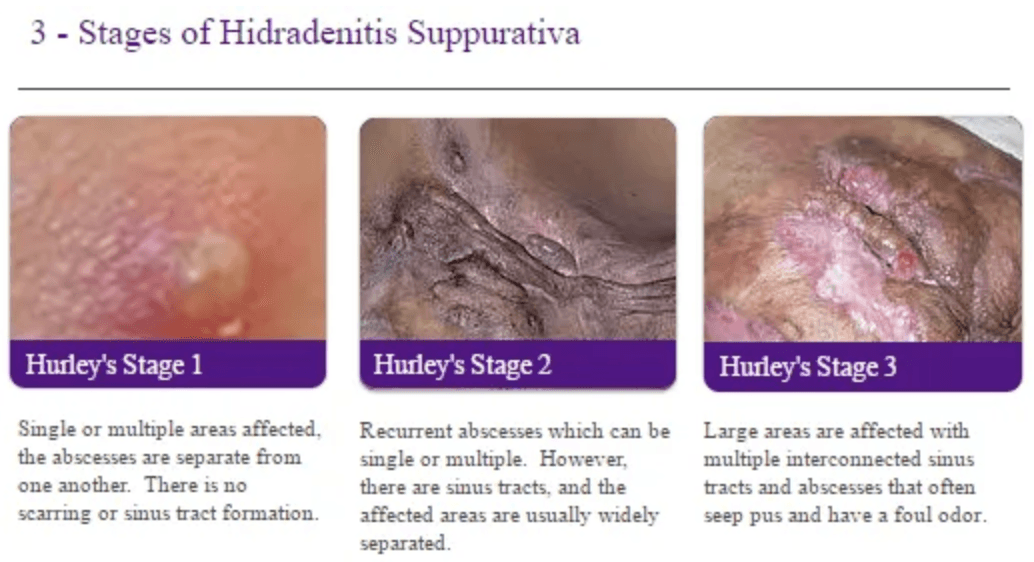
The Hurley clinical staging system stratifies individual skin regions into three severity groups:
- Stage I – Abscess formation (single or multiple) without skin tunnels or cicatrization/scarring
- Stage II – Recurrent abscesses with skin tunnels and scarring, single or multiple widely separated lesions
- Stage III – Diffuse or almost diffuse involvement, or multiple interconnected skin tunnels and abscesses across the entire area
In the Hurley staging system, overall disease staging refers to the worst-affected skin region, and most patients with HS have stage I disease. There is no evidence that patients with HS will progress to stage 3, as many remain at stage 1 without further advancement.
Additional information on HS can be found on the US National Library of Medicine website, http://www.nlm.nih.gov/.
References:
Ingram J. (2025) Hidradenitis suppurativa: Pathogenesis, clinical features, and diagnosis. UpToDate. Retrieved October 21, 2025.